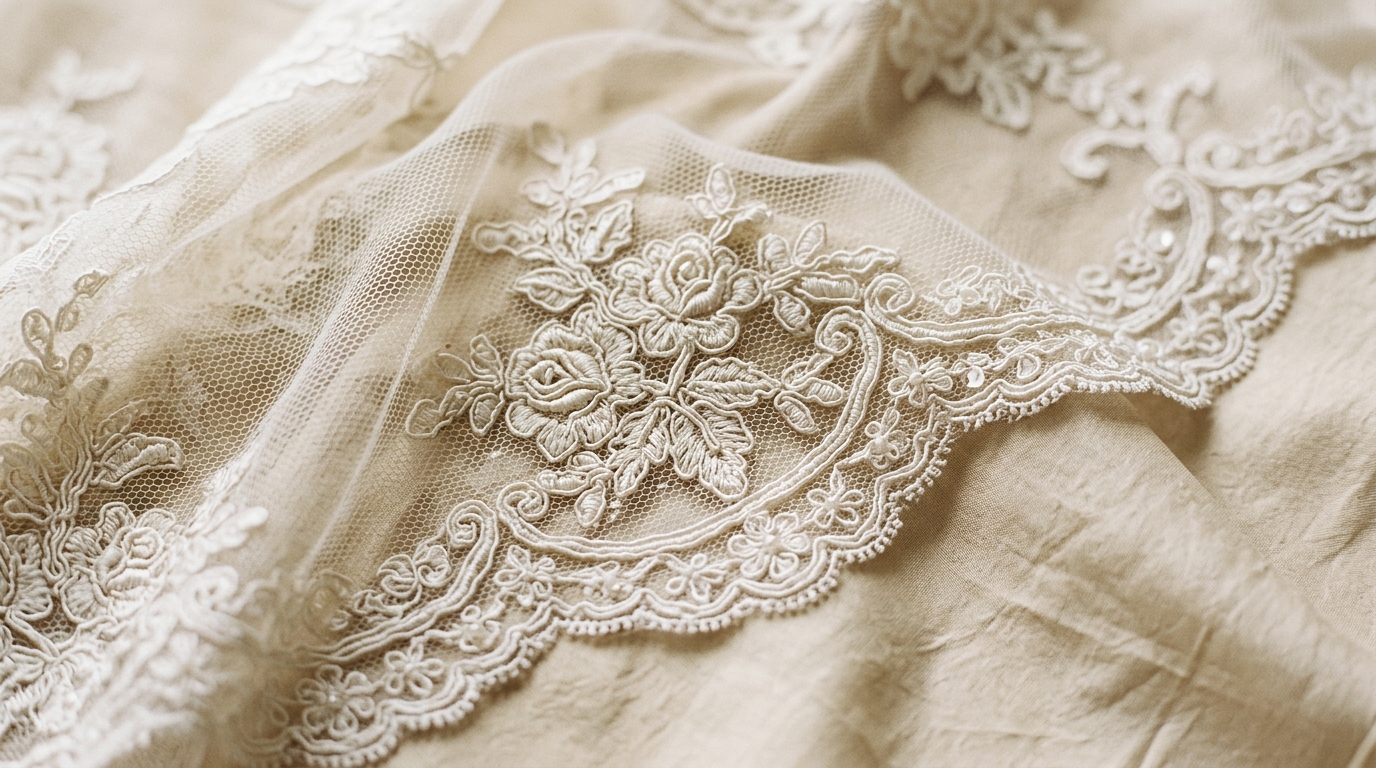
Selecting the right fancy dress lace is one of the most critical decisions for textile sourcing managers, fashion designers, and apparel manufacturers. Lace is rarely a purely decorative trim; in commercial apparel, it functions as a structural component requiring exact elastic elongation, tension recovery, and seam shear strength.
In an increasingly competitive global textile marketplace, garment brands cannot afford fabric defects such as scalloped edge fraying, uneven dye uptake, or post-wash shrinkage. This comprehensive guide outlines the industrial principles of fancy dress lace engineering, exploring how yarn selection, machine gage, and finishing treatments dictate performance across bridal, fashion apparel, lingerie, and home furnishings.
Understanding fancy dress lace: Structure, Construction, and Machine Technologies
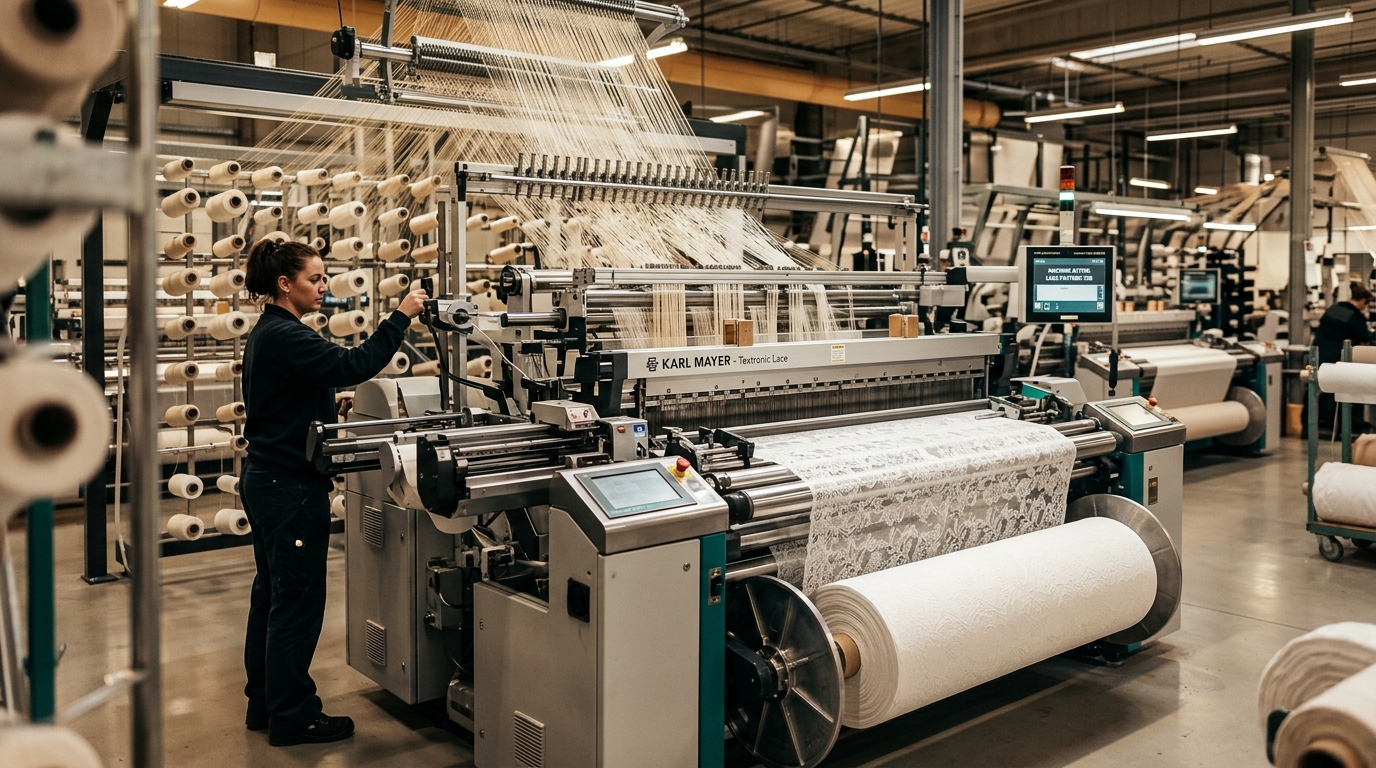
The mechanical integrity of fancy dress lace begins with loom architecture. Modern industrial lace production utilizes multi-bar electronic warp knitting machines (such as Karl Mayer Textronic and Jacquardtronic systems) capable of laying up to 64 individual guide bars to formulate three-dimensional cord effects and variable mesh grounds.
Unlike circular knits or woven textiles, warp-knitted lace interlocks individual yarn loops diagonally, rendering the fabric inherently fray-resistant. This fundamental structural property allows fashion manufacturers to employ raw-edge lace hemlines without risking yarn unraveling during garment assembly or consumer wear.
Warp Knitting vs. Raschel vs. Leavers Looms
In commercial operations, Warp Knitting vs. Raschel vs. Leavers Looms dictates both the production efficiency on the cutting table and the final drape on the body form. Specifying the exact yarn denier ensures crisp motif definition without adding unwanted bulk to garment seam allowances.
Furthermore, textile testing laboratories evaluate tear strength (ASTM D2261) and abrasion resistance to certify that high-friction contact areas remain free from yarn fuzzing and pilling throughout repeated commercial wash cycles.
Yarn Compositions: Polyamide, Cotton, Elastane, and Silk Blends
In commercial operations, Yarn Compositions: Polyamide, Cotton, Elastane, and Silk Blends dictates both the production efficiency on the cutting table and the final drape on the body form. Specifying the exact yarn denier ensures crisp motif definition without adding unwanted bulk to garment seam allowances.
Furthermore, textile testing laboratories evaluate tear strength (ASTM D2261) and abrasion resistance to certify that high-friction contact areas remain free from yarn fuzzing and pilling throughout repeated commercial wash cycles.
Gage, Stitch Density, and Areal Weight (GSM)
In commercial operations, Gage, Stitch Density, and Areal Weight (GSM) dictates both the production efficiency on the cutting table and the final drape on the body form. Specifying the exact yarn denier ensures crisp motif definition without adding unwanted bulk to garment seam allowances.
Furthermore, textile testing laboratories evaluate tear strength (ASTM D2261) and abrasion resistance to certify that high-friction contact areas remain free from yarn fuzzing and pilling throughout repeated commercial wash cycles.
Key Technical Selection Criteria for Bridal Brands & Designers
When specifying fancy dress lace for volume apparel production, sourcing teams must calibrate technical performance metrics against target retail price points. Drape and tactile handfeel must be balanced against mechanical resilience, particularly for form-fitting garments and structural corsetry.
Dimensional Stability and Elastic Recovery Ratios
In commercial operations, Dimensional Stability and Elastic Recovery Ratios dictates both the production efficiency on the cutting table and the final drape on the body form. Specifying the exact yarn denier ensures crisp motif definition without adding unwanted bulk to garment seam allowances.
Furthermore, textile testing laboratories evaluate tear strength (ASTM D2261) and abrasion resistance to certify that high-friction contact areas remain free from yarn fuzzing and pilling throughout repeated commercial wash cycles.
Edge Construction: Scalloped Selvage, Clean-Cut, and Overlock Trims
In commercial operations, Edge Construction: Scalloped Selvage, Clean-Cut, and Overlock Trims dictates both the production efficiency on the cutting table and the final drape on the body form. Specifying the exact yarn denier ensures crisp motif definition without adding unwanted bulk to garment seam allowances.
Furthermore, textile testing laboratories evaluate tear strength (ASTM D2261) and abrasion resistance to certify that high-friction contact areas remain free from yarn fuzzing and pilling throughout repeated commercial wash cycles.
Color Fastness and Piece-Dyeing Tolerances (ΔE ≤ 0.8)
In commercial operations, Color Fastness and Piece-Dyeing Tolerances (ΔE ≤ 0.8) dictates both the production efficiency on the cutting table and the final drape on the body form. Specifying the exact yarn denier ensures crisp motif definition without adding unwanted bulk to garment seam allowances.
Furthermore, textile testing laboratories evaluate tear strength (ASTM D2261) and abrasion resistance to certify that high-friction contact areas remain free from yarn fuzzing and pilling throughout repeated commercial wash cycles.
Common Manufacturing Mistakes and How to Prevent Them
A robust mill sourcing protocol ensures batch-to-batch repeatability across multi-container wholesale shipments. For brands expanding into international retail markets, ensuring chemical compliance and physical longevity must be verified prior to bulk cutting approval.
Mismatched Stretch Direction Across Garment Panels
In commercial operations, Mismatched Stretch Direction Across Garment Panels dictates both the production efficiency on the cutting table and the final drape on the body form. Specifying the exact yarn denier ensures crisp motif definition without adding unwanted bulk to garment seam allowances.
Furthermore, textile testing laboratories evaluate tear strength (ASTM D2261) and abrasion resistance to certify that high-friction contact areas remain free from yarn fuzzing and pilling throughout repeated commercial wash cycles.
Needle Cutting and Stitch Rupture During High-Speed Sewing
In commercial operations, Needle Cutting and Stitch Rupture During High-Speed Sewing dictates both the production efficiency on the cutting table and the final drape on the body form. Specifying the exact yarn denier ensures crisp motif definition without adding unwanted bulk to garment seam allowances.
Furthermore, textile testing laboratories evaluate tear strength (ASTM D2261) and abrasion resistance to certify that high-friction contact areas remain free from yarn fuzzing and pilling throughout repeated commercial wash cycles.
Shrinkage Discrepancies During Industrial Garment Finishing
In commercial operations, Shrinkage Discrepancies During Industrial Garment Finishing dictates both the production efficiency on the cutting table and the final drape on the body form. Specifying the exact yarn denier ensures crisp motif definition without adding unwanted bulk to garment seam allowances.
Furthermore, textile testing laboratories evaluate tear strength (ASTM D2261) and abrasion resistance to certify that high-friction contact areas remain free from yarn fuzzing and pilling throughout repeated commercial wash cycles.
Mill Sourcing Checklist & Quality Assurance Protocols
A robust mill sourcing protocol ensures batch-to-batch repeatability across multi-container wholesale shipments. For brands expanding into international retail markets, ensuring chemical compliance and physical longevity must be verified prior to bulk cutting approval.
Physical Strike-Off Verification and Lab-Dip Protocol
In commercial operations, Physical Strike-Off Verification and Lab-Dip Protocol dictates both the production efficiency on the cutting table and the final drape on the body form. Specifying the exact yarn denier ensures crisp motif definition without adding unwanted bulk to garment seam allowances.
Furthermore, textile testing laboratories evaluate tear strength (ASTM D2261) and abrasion resistance to certify that high-friction contact areas remain free from yarn fuzzing and pilling throughout repeated commercial wash cycles.
OEKO-TEX Standard 100 and REACH Chemical Testing
In commercial operations, OEKO-TEX Standard 100 and REACH Chemical Testing dictates both the production efficiency on the cutting table and the final drape on the body form. Specifying the exact yarn denier ensures crisp motif definition without adding unwanted bulk to garment seam allowances.
Furthermore, textile testing laboratories evaluate tear strength (ASTM D2261) and abrasion resistance to certify that high-friction contact areas remain free from yarn fuzzing and pilling throughout repeated commercial wash cycles.
Minimum Order Quantities (MOQ) and Lead Time Optimization
In commercial operations, Minimum Order Quantities (MOQ) and Lead Time Optimization dictates both the production efficiency on the cutting table and the final drape on the body form. Specifying the exact yarn denier ensures crisp motif definition without adding unwanted bulk to garment seam allowances.
Furthermore, textile testing laboratories evaluate tear strength (ASTM D2261) and abrasion resistance to certify that high-friction contact areas remain free from yarn fuzzing and pilling throughout repeated commercial wash cycles.
Conclusion: Scaling Production with Precision Manufacturing
A robust mill sourcing protocol ensures batch-to-batch repeatability across multi-container wholesale shipments. For brands expanding into international retail markets, ensuring chemical compliance and physical longevity must be verified prior to bulk cutting approval.
Frequently Asked Questions
What is the standard minimum order quantity (MOQ) for wholesale fancy dress lace?
Standard stock mill designs typically require a low MOQ of 300 to 500 meters per colorway, while custom-engineered CAD jacquard patterns and specialized dye lots generally start at 1,500 to 3,000 meters depending on machine width and yarn composition.
How does warp-knitted fancy dress lace prevent fraying during garment production?
Warp-knitted lace interlocks individual yarn loops diagonally across parallel stitch pillars rather than perpendicular warp and weft intersections. This mechanical structure prevents laddering and allows clean-cut edges without overlock surging.
What is the typical lead time for physical strike-off sampling and bulk production?
Physical strike-offs (swatch headers or 5-meter sample lengths) are dispatched within 48 to 72 hours for existing qualities, or 7 to 10 days for custom CAD motifs. Bulk roll production is typically completed in 3 to 4 weeks depending on order volume.
Can fancy dress lace be custom piece-dyed to specific Pantone or brand color standards?
Yes. Modern computerized jet dyeing vessels calibrate exact dye formulations matching Pantone TCX/TPG references with tight spectrophotometer tolerances (Delta E <= 0.8) under multi-light-source inspection.
Ready to Source or Customize Your fancy dress lace?
LaceCraft Manufacturing provides direct mill sourcing, fast strike-off sampling in 48-72h, and wholesale bulk production with worldwide export compliance.
Request a Custom Quote →